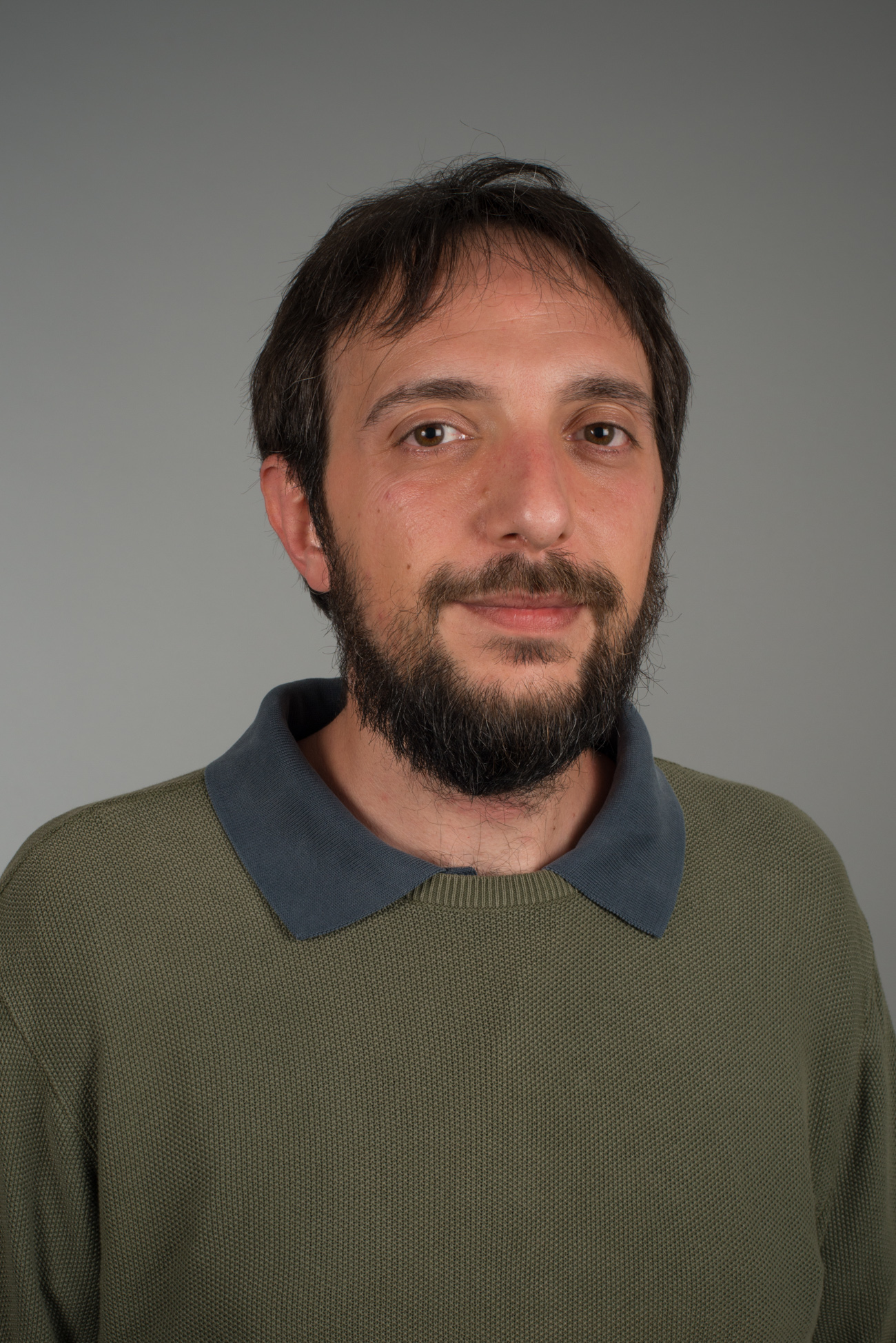
LORENZI ROBERTO
- U05, Floor: 1, Room: 1046
Student office hours are flexible and can be arranged upon request, by scheduling an appointment in advance via email.
Biography
Roberto Lorenzi is a materials scientist working in spectroscopy and experimental condensed matter physics. He is Associate Professor of Physics at the Department of Materials Science, University of Milano-Bicocca, where he teaches Laboratory of Physics I (BSc in Scienza e nanotecnologia dei materiali) and Physics of Vision (MSc in Optics and Vision Science).
He obtained his European PhD in Physics and Chemistry of Advanced Materials in 2010 from the University of Milano-Bicocca, with a research period at the Optoelectronic Research Centre of the University of Southampton. He subsequently held positions as researcher and tenure-track assistant professor, also serving as Principal Investigator of competitive national and regional research projects.
He has conducted research and collaborations at international institutions including ETH Zurich, the Czech Academy of Sciences, and the Mendeleev University of Moscow, and carries out experimental work at large-scale facilities such as DESY (Hamburg), MAX IV (Lund), and Elettra (Trieste). He collaborates with the Italian Gemmological Institute and with academic and industrial partners on spectroscopic analysis of materials.
He is active as a reviewer for international funding agencies and journals, and serves on advisory and organizing committees for conferences in the field of dielectric and scintillating materials. He obtained the Italian National Scientific Qualification for Associate and Full Professor in Physics (2017, 2022). In 2017 he received the “Young Talent Award” from the University of Milano-Bicocca and in 2025 the Best Oral Presentation Award at the 27th International Congress on Glass.
He is author of approximately 90 publications in international journals and co-inventor of 4 patents.
Research
The research activity is situated in experimental condensed matter physics and materials science, with a focus on the study of optical properties and charge transport mechanisms in dielectric and nanostructured systems.
The main research lines concern the development and characterisation of advanced optical materials, including garnet-based scintillating ceramics and nanostructured glass-ceramics, as well as the study of radiation conversion and detection processes. A further area of interest is the spectroscopic analysis of natural and synthetic materials, including gemstones and diamonds, aimed at the identification of defects and colour centres.
Experimental work is based on advanced techniques in optical spectroscopy and luminescence, time-resolved measurements, and studies under extreme conditions, including vacuum ultraviolet spectroscopy and experiments at X-ray and synchrotron radiation facilities.